

Broadway Tower is an 18th-century folly on Beacon Hill in the Cotswolds, built for the 6th Earl of Coventry and completed in 1798. Its history spans landscape design, private printing, farm life and Cold War observation, making the tower more than a landmark on the escarpment.
- Designed by James Wyatt and completed in 1798
- Set within a 200-acre estate of parkland
- Used as a private printing workplace from 1822 to 1862
- About a 10-minute drive from a guesthouse in Chipping Campden
Why Broadway Tower was built
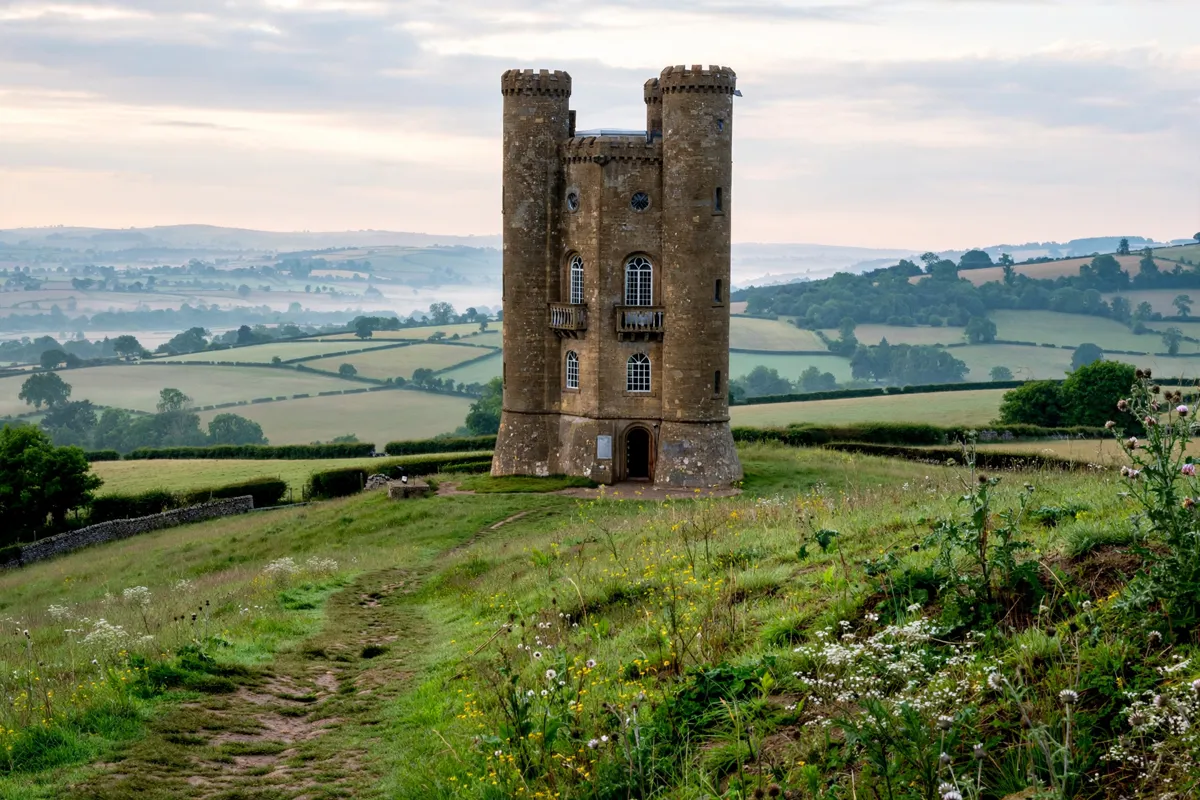
Broadway Tower was built as a folly on Beacon Hill, where the elevated setting had already served a practical purpose. The tower’s official history describes it as the brainchild of landscape designer Capability Brown. Architect James Wyatt designed it for George William, the 6th Earl of Coventry, and it was completed in 1798.
Before the tower existed, Beacon Hill was used to send long-distance signals. One warning sent from the hill announced the Spanish Armada’s approach in May 1588. The tower’s position therefore carries a story that began before its construction: the high ground was useful for seeing and communicating across the landscape.
The site lies within a 200-acre estate of parkland. Historic England describes the building as a Grade II listed folly, first designated on 30 July 1959.
The tower’s architecture and setting
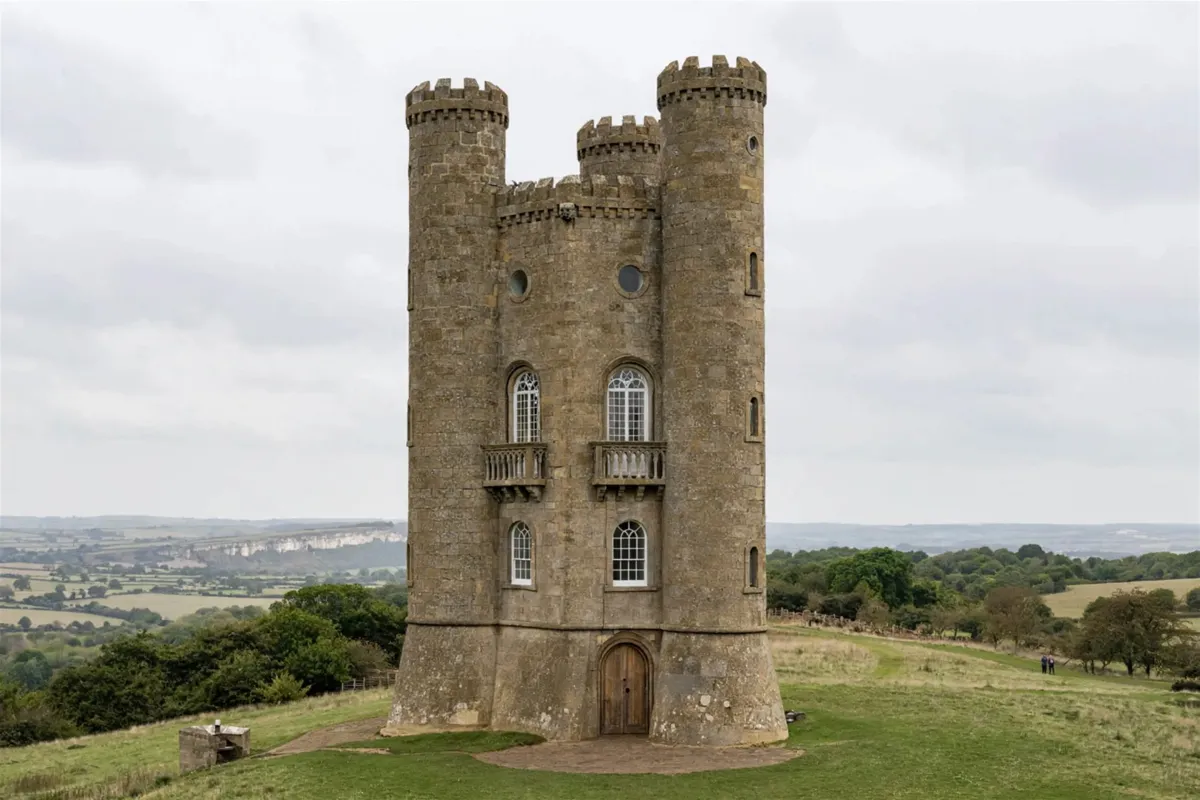
Broadway Tower’s distinctive outline comes from its four-storey limestone ashlar structure, three round corner turrets and embattled parapets. Those features give the folly the appearance of a fortified tower, though it was built as a designed landmark rather than a working defensive building.
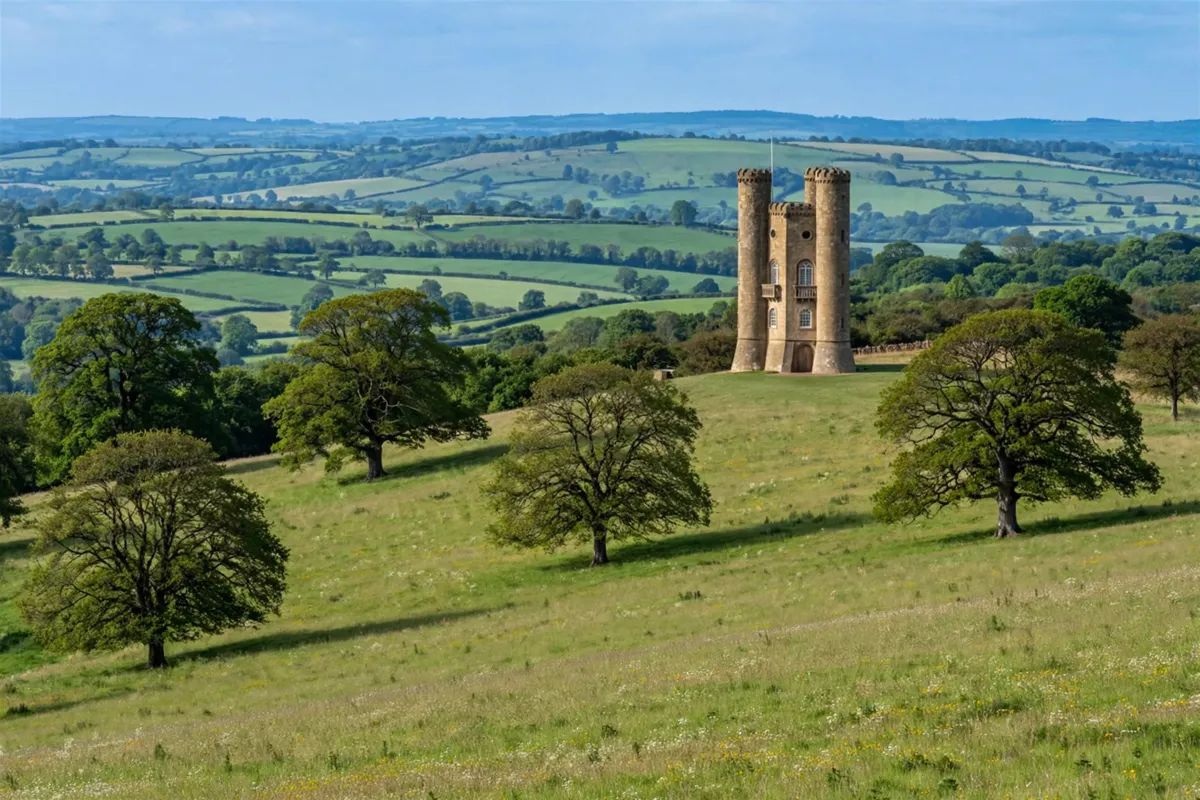
The building stands on Beacon Hill in the Cotswolds, in an elevated position within the estate. From its roof viewing platform, the official history describes views across 16 counties and 62 miles in each direction, and calls it the highest point on the Cotswolds.
You can pair a look at the architectural details below with the wider landscape visible from the top.
For practical details on access and what a visit involves, the Broadway Tower visitor guide covers the visitor side of the site. Opening times can change, so check the official site before you go.
People and uses associated with the site
Broadway Tower has served very different purposes since its construction, from a private printing workplace to a farmhouse and an observation post.
Sir Thomas Phillipps acquired the tower in 1822 and installed a press to print manuscripts and catalogues from his collection. His private press operated there from 1822 to 1862; during this period, the tower became known as the “Lighthouse of Wisdom.”
The tower also drew artists associated with the Arts and Crafts movement. William Morris, Dante Gabriel Rossetti and Edward Burne-Jones visited as a country retreat. The official history says Morris began his campaign to preserve historic monuments while staying there.
By the early 20th century, the tower had been converted into a farmhouse, and tenant farmers worked the surrounding land known as Tower Farm. Later, the Royal Observer Corps used an underground bunker, operational from 1960, to track and record incoming nuclear weapons, locate their blast points and measure explosion power. The Broadway Master Post closed in September 1991.
You can book a tour of the bunker. The guide to Broadway Tower parking covers the separate practical question of where to park and what to check before setting out.
How to read the history during a visit
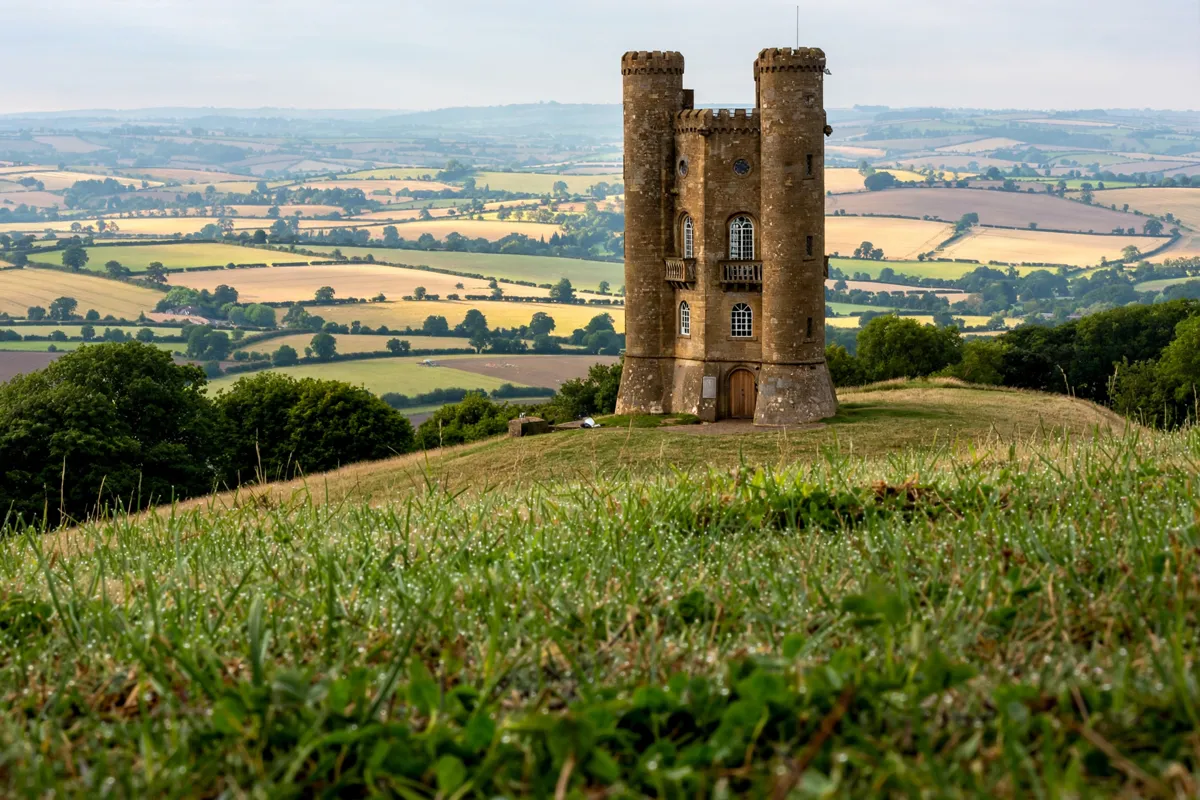
You can follow the site’s changing roles by looking at the tower, the grounds and the underground bunker as parts of one place. The tower first opened to visitors in 1976, on the initiative of Lord Dulverton of Batsford Estate. Today, you can use a multimedia guide, see Georgian interiors and climb to the roof viewing platform.
The bunker adds a later chapter to the story, while the tower’s design and setting point back to its origins as a folly. You’ll find Broadway Tower on the A44 Evesham/Moreton in Marsh route, 1 mile south-east of Broadway, Worcestershire, WR12 7LB.
FAQs
Who designed Broadway Tower?
James Wyatt designed it for George William, the 6th Earl of Coventry. Landscape designer Capability Brown is described in the tower’s official history as the person behind the idea.
What was Broadway Tower used for?
Its uses included a private printing press, a farmhouse and a Royal Observer Corps underground bunker. The tower is now open to visitors.
Can you visit the Royal Observer Corps bunker?
Tours of the bunker can be booked. Check the official site before planning around a tour.